- Five to Thrive
- Posts
- #150 – 'Get a Mac' & Shattered Assumptions
#150 – 'Get a Mac' & Shattered Assumptions
Quote, Podcast, Deep Dive, Article, Tweet.

Dimitri Gremos
April 08, 2026
Good morning everyone,
Hope you’re having a great week!
The big 1-5-0!
Thank you all so much for your support ❤️
It means more than you know.
Let’s jump in.
read online on my website
read time 3 minutes
#150 – The Rundown:
Quote: The consolation prize of the less talented.
Podcast: How the brain learns to read.
Deep Dive: Apple’s ‘Get a Mac’ advertising campaign.
Article: Shattered assumptions and the energy quandry.
Tweet: The enabler.
Quote:
“The greater the artist, the greater the doubt; perfect confidence is granted to the less talented as a consolation prize.”
Robert Hughes
Podcast:
Franklin UnlimitED | How The Brain Learns To Read, And Relearns Itself
Franklin UnlimitEd is a podcast hosted by Will Campbell – a former teacher of mine at Trinity Grammar and now Founding Head of School at Franklin in New Jersey.
It is a high school at the absolute forefront of education, having recently won the 2025 World’s Best School Prize for Innovation by T4 Education.
As someone incredibly curious in the science behind teaching, the podcast has been an awesome way to stay across the latest updates in learning at a high school level and beyond.
One of the more recent episodes with special guest Dr. Ken Pugh, President and Director of Research at Haskins Laboratories and cognitive neuroscientist affiliated with Yale University School of Medicine and the University of Connecticut, was particularly interesting.
Reading is one of the most cognitively demanding skills a person can acquire, and for some students, the process is anything but automatic.
Dr. Pugh has spent decades studying how the brain develops reading skills and how targeted instruction can rewire the brain when learning differences like dyslexia get in the way.
What I found most intriguing about the episode was the potential for neuroscience to play an increasingly significant role in course design and teaching methods within the education system.
This has been made infinitely more feasible today with the rise in the awareness of neuroscience concepts and terminology thanks in large part to social media and podcasts.
Fascinating stuff (to me, at least!).
Listen on Spotify or Apple Podcasts.
[Duration: 55 minutes]
(P.S. I made a Spotify playlist with every podcast I’ve ever recommended. Hope they bring you as much value as they’ve brought me.)
Deep Dive:
How Apple Cleverly Positioned the Mac over the PC
Before Apple became the default symbol of sleek, modern tech, Steve Jobs had a persuasion problem.
By the mid-2000s, PCs still dominated the home computer market and Apple needed a way to convince everyday consumers that a Mac was not only better, but easier, cooler, and more intuitive.
Enter: ‘Get a Mac’.
The ‘Get a Mac’ advertising campaign ran from May 2006 to October 2009 with a total of 66 different television commercials aired internationally.
Each advertisement lasted 30 seconds in duration and was typically set up on a white back drop with 2 men standing side by side.
One would introduce himself as a Mac (“Hello, I’m a Mac”), and the other, a PC (“And I’m a PC”).
They’re seriously entertaining and thankfully someone has gone to the effort of compiling all of them into a single YouTube video. Highly recommend checking them out for context.
The brilliance of the campaign was in its simplicity.
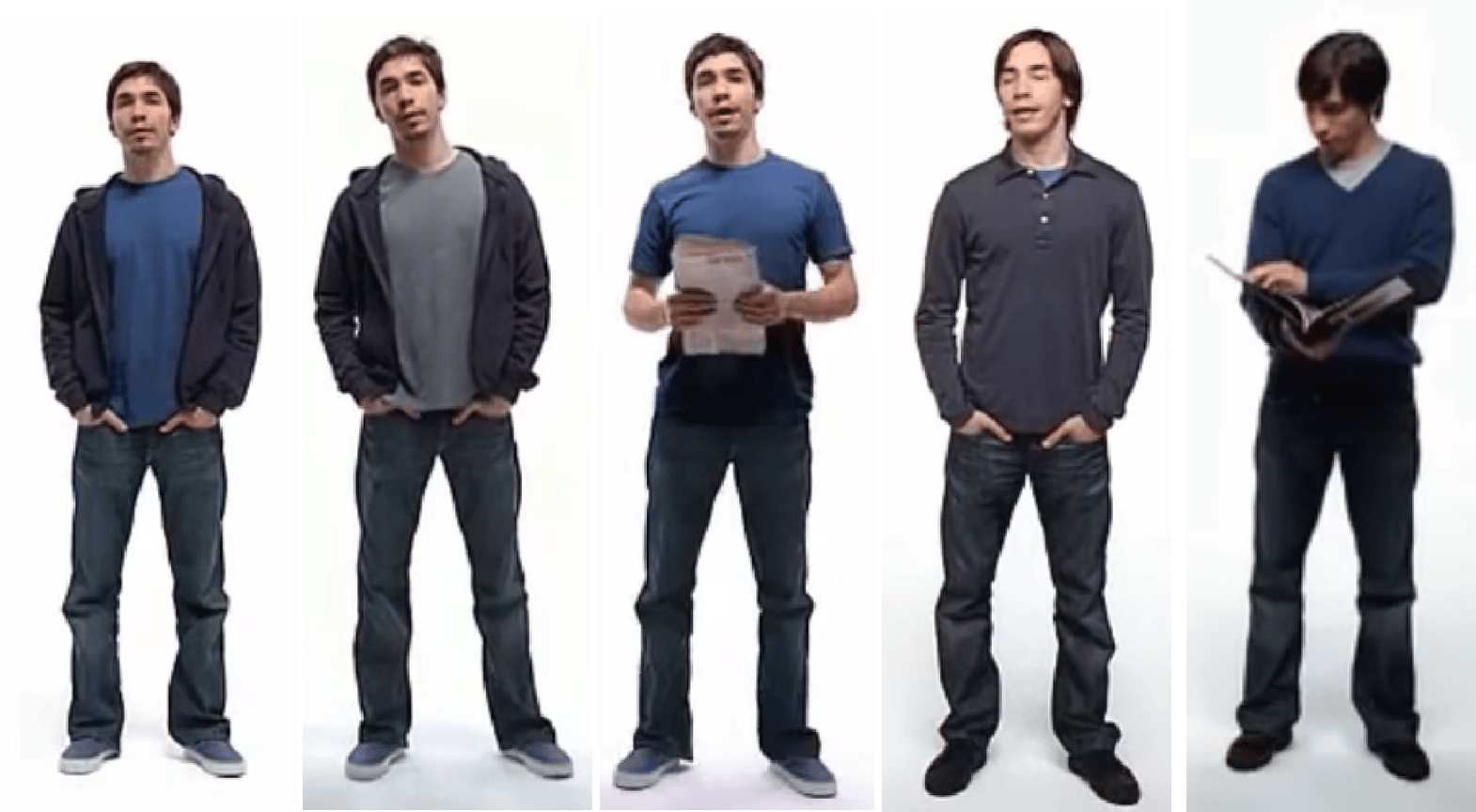
Mac, portrayed by up-and-coming actor Jason Long, was young, relaxed, capable, and current. In each advertisement, he generally appeared dressed in a jeans/t-shirt/jacket get-up and stood casually with his hands in his pockets.
The wardrobe stylist of the campaign, Danielle Kays, actually commented years after ‘Get a Mac’ that Steve Jobs wanted whatever was ‘in’ at the time in terms of fashion and style to appear on Justin. He insisted that the image of a Mac was quintessential with the demographic Apple were appealing to.
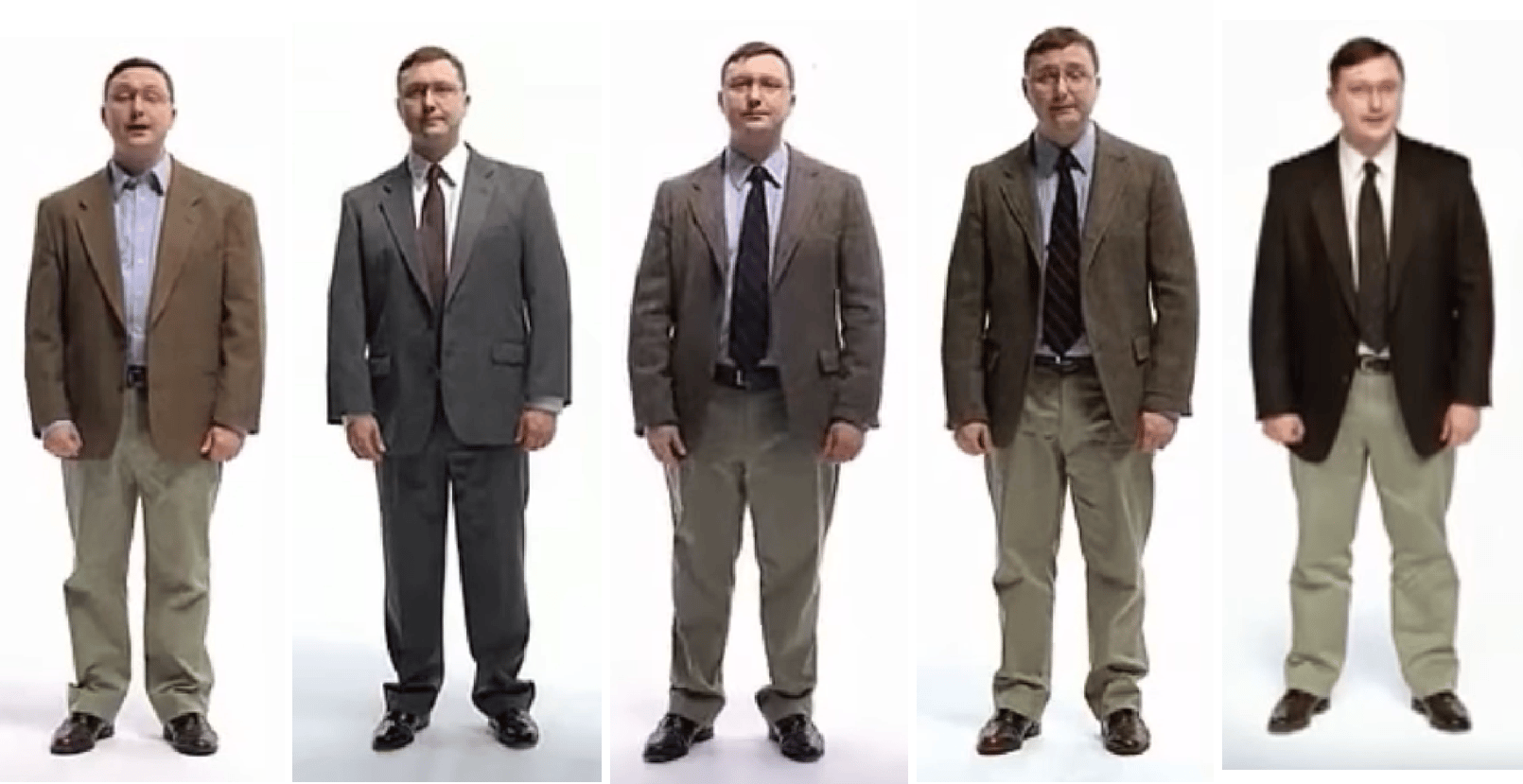
On the other hand, the PC was played by John Hodgman, coming across as awkward, monotone, corporate, and outdated. Often dressed in a very bland suit-and-tie combination, Apple sought to portray PCs (i.e. anything other than a Mac) as traditional, unchanging, and boring.
The campaign strongly targeted those consumers who were generally dissatisfied with their PC but didn’t exactly know what else was out there.
Sure, PCs were clunky and prone to consistent malfunctions, but they were a known commodity. Switching over to a Mac was something daunting and foreign – almost like learning a new language.
So instead of marketing a computer, Apple gave the brand a face, a tone, a posture and an identity people could easily instantly understand.
And most importantly, they did so in a way that highlighted the Mac’s strengths while simultaneously putting the weaknesses of their competitors out there on display.
It wasn’t subtle, and that was the point.
They used humour to lower resistance, characterisation to sharpen the contrast, and repetition to make the message memorable.
Sure, it all sounds great. But the key question is: Did the ads work?
Well, after releasing the very first commercial, sales in the following quarter increased by 12%. And in Q4 2006, Apple sold a record breaking 1.6 million Macs, representing a 39% increase from prior to the start of the campaign.
Sales continued to dramatically rise throughout the 4 years of commercials, and in 2010 Adweek declared ‘Get a Mac’ the best advertising campaign of the decade.
Not too shabby…
‘Shattered Assumptions And The Energy Quandry’ by Louis-Vincent Gave
Really thought-provoking article by Louis-Vincent Gave of Gavekal Research on the macroeconomic themes which have considerably changed the way governments and investors look at energy.
These were the '“shattered assumptions” he refers to:
“To the extent that policymakers talked about energy, it was mostly to virtue-signal around climate goals and impose more regulations on a beleaguered private sector. Indirectly, this virtue signaling rested on three key assumptions:
1) US treasuries can be transformed into energy at a moment’s notice, since we live in a world in which energy is plentiful.
2) The US Navy controls the world’s sea lanes.
3) The US is a benevolent hegemon with an embedded interest in maintaining the global trading system roughly as it is.
The events of the past five years have shattered these assumptions.”
Recommend checking out the full article here.
Tweet:
The Enabler
Thanks for reading! Grateful for your support.
Stay hungry, stay humble, stay curious. ⚡
If you enjoyed this newsletter, it would mean the world if you could forward it to a friend or send them my website.
This goes a long way to helping me reach more people :)
See you in the next one,
Dimi